Transcript
The Human Factor in Tech
I think the need for business transformation is simple. The world is moving faster than ever before. It is a very rapidly changing environment, and if you are standing still, you are moving backwards. There is simply no option for businesses at this point in time.
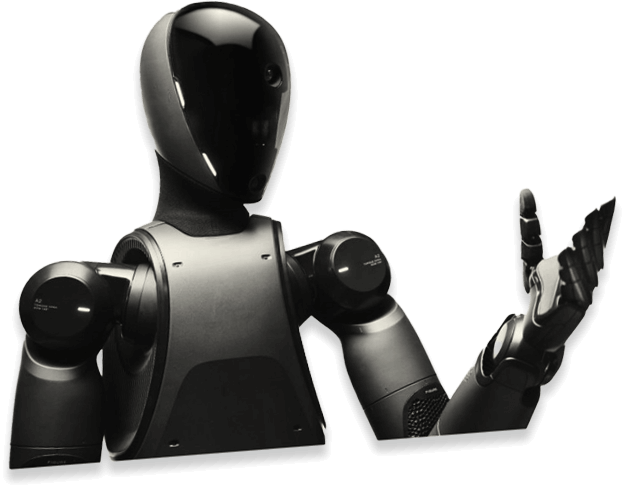
People are talking about having an agentic board member sitting in boardroom meetings with almost the equivalent status of a human board member. But if you have one, why stop at one? At what point do we have twelve members of the board and one AI agent, or twelve AI agents and one human member? This raises an important question around the human in the loop: when should humans get engaged? Ideally, over time, less and less, as AI gains more autonomy. But how and when humans step in remains an unsolved problem.
Hello, I’m Tom Parker, and welcome to The Next Five podcast, brought to you by the FT Partner Studio. In this series, we ask industry experts how their world will change in the next five years and the impact that will have on our day-to-day lives.
In this episode, we look at the human side of tech transformation: how we are adapting to work alongside technologies such as AI, and how organizations are transforming their business operations to meet the current and future needs of a tech-savvy workforce.
The fourth industrial revolution is fully underway. Technologies such as artificial intelligence are developing rapidly, and so too must the humans that deploy and use them. While evolution is typically slow, businesses today must quickly reconfigure how they work to gain the advantages technology can offer.
An FT Longitude study commissioned by Liberty Blume found that 79% of organizations believe business transformation will be key to driving growth.
This is Natalie Douglas, CFO at Liberty Blume, a tech-enabled business services group.
“We really see this as a shift in mindset. It used to be all about cost transformation—doing more for less. But today, transformation is no longer about streamlining the back office. It’s about enabling the business for growth. We also found that 87% actively advocate for transformation, and we see that reflected in our conversations with customers. They are asking not just how to do more for less, but how transformation enables growth. That is a real evolution.”
The back office has long been an unsung hero, enabling efficiency at the front end. But it is no longer just a utility—it is a strategic driver of growth in a future shaped by both humans and artificial intelligence.
Deloitte believes that digital is the future of global business services—not as a single tool or technology, but as a fundamentally different way of operating. Growth is unlocked at the intersection of human industry expertise and digital strategy and execution.
“Ten years ago, we asked how to layer technology into people processes. Now the question is how to layer people into technology processes. That’s a major shift. Technology shouldn’t remove the need for people—it reframes what people do. Technology should do the heavy lifting so humans can do the thinking.”
There is no one-size-fits-all solution. Technology reinforces human capability. That has to be the core message. Humans still do the human work—problem-solving, applying judgment, navigating complexity. But great technology enables people to generate insight, solve better problems, drive more value, and ultimately redefine the human role within the process.
This is Professor Ashley Buganza, Chair in Business Transformation and founder of Brunel University’s Centre for Artificial Intelligence.
“Much of the literature agrees that the future lies in combining human productivity with digital or agentic AI productivity. That’s the sweet spot. Organizations often start with good intentions—focusing on people and culture—but once the technology is implemented, the focus quickly shifts to adapting people to fit the technology. The priority moves from people-first to technology-first far faster than expected.”
This raises a key question: should organizations upskill workers to fit new technology, or should technology developers meet users where they are?
This is Kevin Frichette, co-founder and CEO of FairMarket, an AI-powered autonomous sourcing platform.
“Three years ago, we had no idea we’d be on this ride. Back then, we focused on product experience—not what actions people were actually performing on top of the product. Now we’re thinking about how AI agents can work alongside teams. The goal isn’t replacing people—it’s removing soul-crushing work so people can focus on meaningful, creative, high-value tasks.”
Change fatigue is a real issue. Digitally native businesses often adapt more easily, but large, established organizations face legacy systems and cultural inertia. The challenges are well understood—the differentiator is execution and the ability to foster curiosity.
Resistance to change is inevitable. As Professor Buganza notes, introducing AI into decision-making—such as agentic board members—can trigger fear. People worry about relevance and displacement. This resistance has slowed adoption in every major technological shift before, and AI will be no different.
There are also long-term risks. If AI automates early-career work in fields like law or professional services, organizations must consider who will develop the experience needed to lead future businesses. Removing humans from the loop entirely may create efficiency but reduce resilience, adaptability, and crisis response.
Here’s Natalie again on AI and the workforce.
“AI isn’t coming to take your job—but people who know how to use it are. You cannot do this alone. Change is about culture and education. Technology frees up time. I no longer spend time cleaning data—I spend time understanding what it means and what action to take. That has fundamentally changed the role of finance.”
Even in less digitally mature organizations, Kevin argues that tech savviness won’t be required.
“People won’t need to understand the underlying technology—just how to frame good questions and use the tools available. AI has moved from checking work, to being prompted, to proactively bringing work to humans. The open challenge is when humans should intervene. That human-in-the-loop problem isn’t solved yet.”
Trust is another concern. Kevin compares AI adoption to early aviation: trust developed gradually as systems proved safe, reliable, and observable. The same evolution will happen with AI—just much faster.
So what does this mean for the next five years?
Professor Buganza believes business as usual will become business as constant transformation. The pace of technological change will compress decades of progress into a few years. These technologies will drive unprecedented organizational change—and there’s no slowing down.
Kevin admits no one truly knows what comes next. Possibilities include brain-computer interfaces and deeper integration between humans and machines. Over time, AI will become normalized—not sensational—allowing for true mass adoption across personal and professional life.
Natalie concludes that transformation will shift from cost efficiency to growth enablement. Technology has elevated her role from reporting numbers to being a strategic partner. Understanding the human element is essential. Change will bring fear, but it also creates opportunity.
Transformation may feel disruptive, but disruption also fuels innovation, creativity, and adaptability. As Ashley points out, fear of change is nothing new—but how we respond to it defines our future. A future increasingly enabled by, and coexisting with, technology.